Showing posts with label iron age. Show all posts

Tuesday, 4 September 2018

Viikinkinaisen asukokonaisuus --- My Viking ensemble

Photo: neulansilmanlapi.blogspot.com/


En oikeastaan harrasta rautakautta, mutta en silti voi olla ihailematta viikinkien ja muinaissuomalaisten komeita pukuja. Suomessa järjestetään kuitenkin vuosittain moni hienoja tapahtumia jotka sijoittuvat juuri rautakauteen, joten päätin tänä kesänä saattaa viikinkiaikaisen asukokonaisuuteni kuntoon, jotta voisin ottaa näihin paremmin osaa. Suomalaisen muinaispuvun esiliina ja peplos valmistuvat ehkä jossain vaiheessa...
 
I don't really do much iron age re-enactment or living history, but as a dress and textile nerd I can't help admiring the handsome clothing Iron Age Vikings and Finns used to wear. There are also many nice Iron Age events here, and that is why I finally decided to put my Viking gear in order. My Finnish Iron Age garb still needs an apron and the peplos....


Alusmekot

Under tunics


Tämä Bocktenin miehen mekon kaavoilla valmistettu keltaruskea villamekko valmistui vuosia sitten. Villa on Medeltidsmoden karkeahkoa toimikasta. / This brownish yellow wool dress is cut after the Swedish bocksten man's tunic. The coarse twill woven wool was bought from Medeltidsmode. Photo: neulansilmanlapi.blogspot.com/


Villamekon alla minulla on samalla kaavalla leikattu pellavainen aluspaita, serk, jotka voidaan pitää myös sellaisenaan olkainmekon alla. Ohut ja tiheä valkaisematon pellava on Finkoniasta. Se on ommeltu pellavalangalla. / Underneath I'm wearing a linen smock, serk, that can also be used alone with the aprondress. The thin but dense unbleached linen is from a Finnish shop called Finkonia. It's sewn with linen thread.
Photo: neulansilmanlapi.blogspot.com/


Smokkr


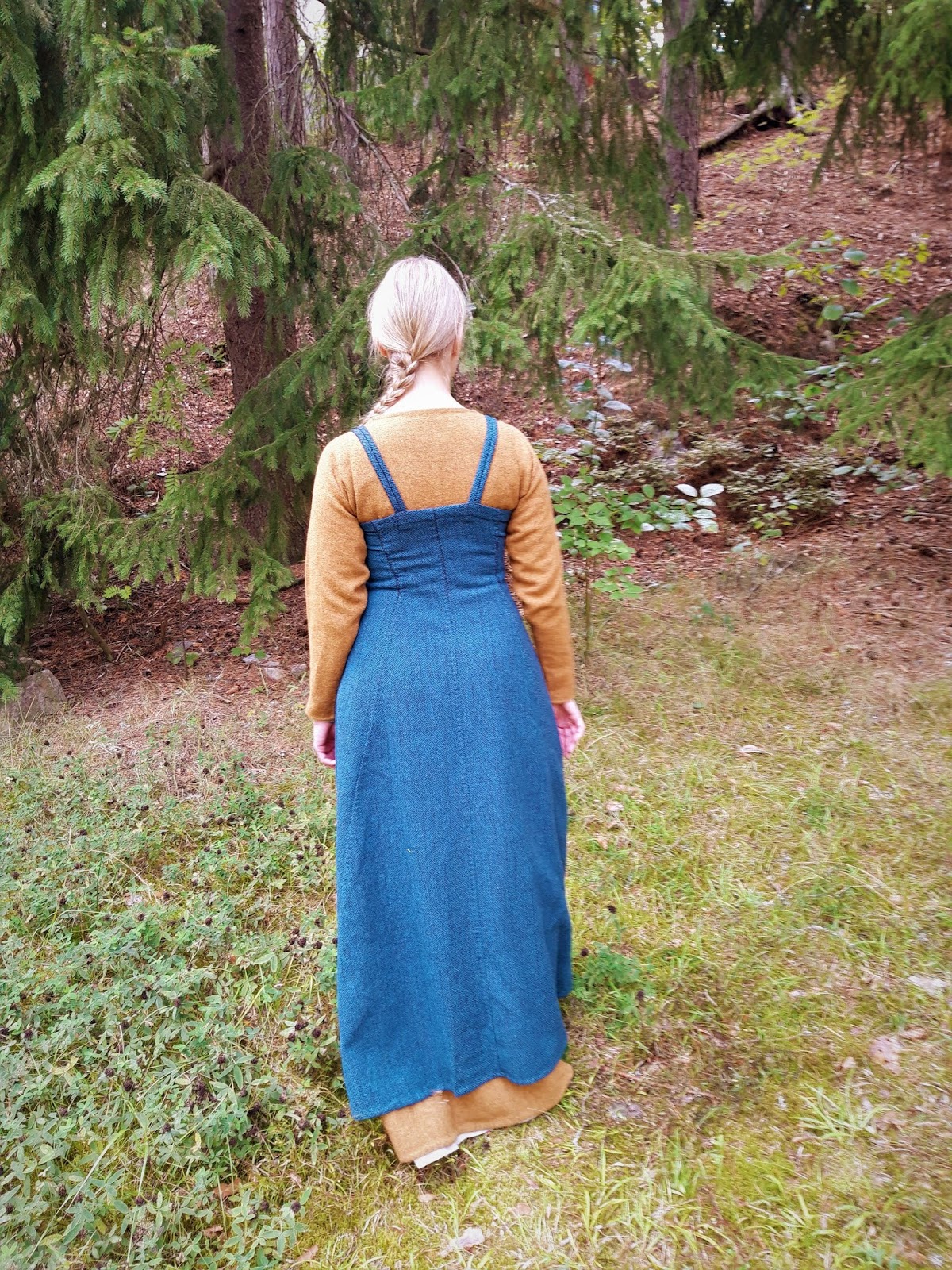
Keltaisen mekon päälle puetaan sinisestä timanttikuvioisesta villasta valmistettu olkainmekko, smokkr. Mekko on ommeltu käsin villalangalla. / On top I'm wearing a blue diamond patterned wool aprondress, smokkr. The dress is handsewn with wool thread. Photo: neulansilmanlapi.blogspot.com/


Yhtään kokonaista olkainmekkoa ei ole säilynyt. Tutkijoiden teoriat mekkojen mallista ja leikkauksesta vaihtelevat. Ne perustuvat tekstiilifragmentteihin, koruihin ja niiden sijaintiin rautakautisen haudan vainajan jäännösten päällä, sekä joihinkin aikalaiskuviin. / No complete surviving aprondress exists. There are different theories as to how they were constructed that are based on textile fragments, brooches, and their positioning on the body in the excavated graves, plus some pictorial evidence. Photo: neulansilmanlapi.blogspot.com/


Olkainmekkoni oli ollut enemmän tai vähemmän käyttövalmiina jo useamman vuoden. Se oli alunperin leikattu kolmesta palasta Nille Glaeselin kirjan kaavan mukaan. En kuitenkaan ollut tyytyväinen mekon istuvuuteen, joten laitoin sen palasiksi, lisäsin sivukappaleet etu ja takakappaleiden väliin ja istutin sen uudelleen. Siksi takakappaleet ovat tavallista kapeammat, mutta nyt mekko ainakin myötäilee notkoselkääni! / My aprondress had been in more or less usable condition for years. It was originally cut after the three pieced pattern in Nille Glaesel's book. Since I'd never been happy with the fit and the general shape, I decided to take it apart, add side pieces between the front and the back pieces, and refit it. This is why the two back pieces are a bit too narrow, but at least now the dress follows the line of my swayback!
Photo: neulansilmanlapi.blogspot.com/


Photo: neulansilmanlapi.blogspot.com/


Avokaulainen takki

Coat with a deep neckline 


On epäselvää käyttivätkö viikinkinaiset lainkaan kaftaanityyppisiä takkeja, kuten Birkan löytöjä tutkinut Inga Hägg on esittänyt. Jotkin tutkijat, kuten esimerkiksi Thor Ewing pitävät tätä epätodennäköisenä ja ovat ennemminkin sitä mieltä, että naiset käyttivät kaftaanin sijaan suorakaiteen muotoista vaippaa, kuten muinaissuomalaiset naiset. Tulkinnan varaa siis löytyy!

It's not clear wether Viking women wore a caftan type garment at all, as Inga Hägg who studied the finds from Birka has suggested. For example, Thor Ewing  finds this proposition unlikely. He thinks that women wore a rectangular cloak instead, like Iron Age Finnish women. That been said, there is clearly room  for interpretation!


Takissa on kaksi etukappaletta, kaksi sivukiila molemmilla puolilla, yksi takakappale ja yksi takakiila, sekä hihat. / The coat consists of two front pieces, two side gores on both sides, one back piece, one back gore, and the sleeves.
Photo: neulansilmanlapi.blogspot.com/


Tämän takin kaavan lähtökohtana oli Nille Glaeselin kirjan kaava -  tosin ilman hassuja lisäkiiloja. Täytyy sanoa, että jouduin muokkaamaan kaavaa aikalailla saadakseni sen toimimaan. / The starting point for the pattern came from Nille Glaesel's book - although I skipped the funny extra gores. I must say I had to make heavy changes to the pattern in order to make it work for me. Photo: neulansilmanlapi.blogspot.com/


Uusi takki ja olkainmekon uudistus tehtiin vain neljässä ja puolessa päivässä. Siitä syystä takin saumat on ommeltu koneella (koska joskus vaatteen valmistuminen on tärkeämpää kuin 100% autenttisuus), lukuun ottamatta hihojen kiinnitystä. Kaikki huolittelut on tehty käsin. / The new coat and the revamp of the aprondress were done in just four and a half days. That's why the coat is partially machine sewn (beacause there are times when it's more important to have a finished garment on time, even if you have to compromise on it's authentisity), save for the sleeves and the finishing touches.
Photo: neulansilmanlapi.blogspot.com/


Photo: neulansilmanlapi.blogspot.com/
neulansilmanlapi.blogspot.com/


Korut ja asusteet

The jewellery and accessories

Metallikorut ovat merkittävä osa viikinkinaisen asua: ne eivät ole pelkästään koristeita, sillä niillä oli käytännöllinen funktio vaatteiden kiinnittiminä. Kuvissa näkyvät pronssikorut on hankittu Historiska Fyndistä. Tämä ruotsalainen yritys on erikoistunut arkeologisten löytöjen pohjalta valmistettujen viikinkiaikaisten ja keskiaikaisten metallikorujen valmistukseen ja myyntiin. Suosittelen! 

Lasihelmien käyttötarkoitus sen sijaan vaikuttaa rajoittuneen koristautumiseen. Alimman lasihelminauhan olen saanut lahjaksi mieheltäni ja se helmet perustuvat ilmeisesti suomalaiseen hautalöytöön. Ylempään helminauhaan olen pujotellut aikojen saatossa keräilemiäni rautakauden tyyliin valmistettuja lasihelmiä.

Metal jewellery is an integral part of Viking womens clothing: they are not mere decorations, since they're used to fasten the garments. My bronze jewellery is  from Historiska Fynd, a Swedish company specializing in Viking and medieval jewellery that's based on archeological findings. I highly recommend them! 

The glass beads on the other hand, seem to be used for decorative purposes. The beads on the bottom string are a gift from my spouse, and they were made after a Finnish iron age burial find. The upper string consists of random iron age style glass beads I've collected over the years.


Photo: neulansilmanlapi.blogspot.com/


Puusankainen laukku on saanut inspiraationsa mm. Haithabusta ja Skandinaviasta löytyneistä puujäänteistä. Puuosat ovat Mikken käsialaa. / The bag with two wooden laths is inspired by the wooden fragments from Haithabu and other parts or Scandinavia. The wooden parts are made by Mikke. Photo: neulansilmanlapi.blogspot.com/


Huput

Hoods

Skjoldehamnin löytöä mukailevat huput täydentävät asua. Niitä siunaantui kolme - kolmessa päivässä. En rekonstruoinut hupun "muotolaskoksia" enkä korvien korkuudella olevia naruja. Ehkäpä lisään ne myöhemmin oranssiin huppuun... Eri väriset huput ovat myös siitä käteviä, että niitä voi yhdistellä monin tavoin asun osien kanssa.

The hoods are inspired by the Skjoldehamn find and they complete the outfit. I somehow managed to make three of them - in three days. I did not reconstruct the running stitches on the top part of the hood that are not exactley darts, but make the hood sit better on the wearer. I also skipped the braided strings that should be attached at  ear level. Perhaps I'll add them later to the orange hood... All in all, different colour hoods are handy when you want to  combine them with different parts of the outfit. 


Oranssi huppu muistuttaa eniten Skjoldehamnin huppua, sillä sen pääntiessä ei ole muotoilua. Se on myös ommeltu esikuvansa tavoin yliluottelemalla. Sininen ja keltainen huppu ovat identtiset: voin tarvittaessa yhdistää ne käännettäväksi hupuksi. (Sininen huppu kuvattu nurjalta puolelta.) / The orange hood is most alike to the Skjoldehamn find: the opening is straight and it's assembled with a whip stitch, unlike the other two. The blue and the yellow hood are identical, and I can combine them if I ever feel the need for a reversable warm winter hood. (The blue hood is photographed inside out.)
Photo: neulansilmanlapi.blogspot.com/


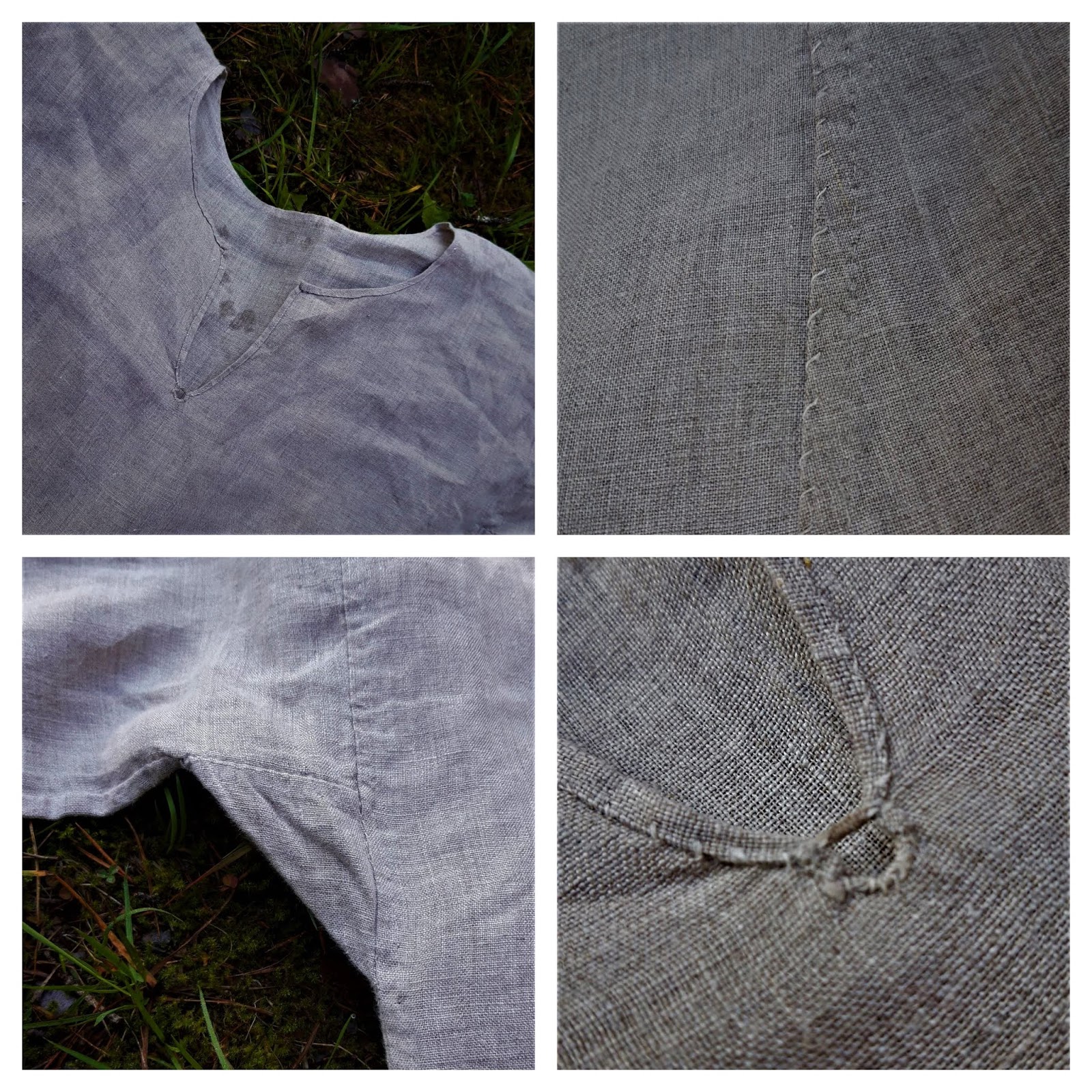
Pääntie on huoliteltu täytelangoilla samaan tapaan kuin Skjoldehamnin löytö. / I neatened the head opening in a similar way as the Skjoldehamn hood: by couching filler threads next to folded raw edges.
Photo: neulansilmanlapi.blogspot.com/


Photos: neulansilmanlapi.blogspot.com/


Photo: neulansilmanlapi.blogspot.com/


Sunday, 31 December 2017

Vuosi 2017 - tuo alusvaatteiden ja blaah-projektien luvattu aikakausi! -- The Year 2017 was a Year of Undies and Blaah-projects!


Ompelu on onnea? Päällä on tietysti muutamassa päivässä hätäpäissä ommeltu hihaton surcote. Ehkäpä se saa hihat ensi vuonna. Sewing equals happiness? I wearing a very quickly made sleeveless surcote. Perhaps I'll add the sleeves next year... Photo: Ari Laakso


Joskus tuntuu siltä ettei saa oikein mitään aikaiseksi. Monet käsitöitä tekevät ihmiset usein valittelevat keskeneräisiä projektejaan - myös minä! Ja niitä kyllä löytyy kaapin pohjalta enemmän kuin tarpeeksi... Vuoden lopussa on kuitenkin mukavampi muistella kaikkea sitä mitä on saanut aikaiseksi vaikkei niihin aina olisi kovinkaan tyytyväinen syystä tai toisesta.  Suurin osa projekteista jäi dokumentoimatta lähinnä sen vuoksi, että aikanaan ne tuntuivat jotenkin tylsiltä, epäonnistuneilta tai muutoin vain epäinspiroivilta. Loppujen lopuksi sillä ei ehkä  ole väliä kuinka hyvin tai huonosti projektit onnistuivat: ne valmistuivat ja jokaisen projektin kohdalla opin taas monia uusia asioita - se jos jokin on merkki hyvin käytetystä ajasta!

At times it feels like you haven't accomplished much. Many people who sew or do other crafts often complain about their unfinnished work - including me! And there are several discarded projects laying in the darkness of my closet... However, at the end of the year it's much nicer to take a more positive stance and really see what you actually have managed to finnish - you might even surprise yourself! Most of the project shown below were not documented for one reason or another. Most often I felt that they were not too succesful or just plain boring and uninspiring. In the end I don't think it matters so much how well or badly they turned out: I finished them and learned many useful things along the way and that's time well spent!

Rautakausi

Iron Age

Pukkisaaren rautakautisen kauppakylän markkinoita varten Mikke sai uuden tunikan. Viikinkiaikainen huppu valmistui markkinoilla puhdetöinä. Itse pukeuduin vanhaan Euran mekkoon, jota tein työnäytöksenä Kuralan Kylämäen ulkoilmamuseon vuosittaisilla muinaistekniikan päivillä muutama vuosi sitten. Hieno esiliina on lainatavaraa. Mikke got a new tunic to wear at the iron age village market in Pukkisaari, Helsinki. The viking age hood was finished at the market. I wore my old Eura dress that I made during the annual ancient techniques days in the open-air museum Kuralan Kylämäki a few years ago. The beautiful apron was a loan. Photo: Johan Blomster


Photo: neulansilmanlapi.blogspot.fi


Photo: neulansilmanlapi.blogspot.fi

Keskiaika

The Middle Ages


Joululahjaksi Mikke sai 1400-luvun asuun (joo, se on työn alla...) lyhyempihelmaisen aluspaidan... For Christmas Mikke got a new shorter shirt to better fit his 15th c. garb (yeah, I haven't finished it yet..)... Photo: neulansilmanlapi.blogspot.fi


....ja pienemmät braiesit (yllä). Isommat 1300-luvullekin sopivat valmistuivat jo kesällä. ... and a smaller pair of braies (above) The bigger 14th century ones were finished this summer. Photo: neulansilmanlapi.blogspot.fi


Tiedätkö sen tunteen, kun olet kahdessa päivässä ommellut uuden 1400-luvun vyötärösaumallisen hätävaramekon ja kaikki ihanat ystävät ovat ympärillä, mutta oman työn tulokset eivät jotenkin innosta... Siksi naama on nurinpäin. Seura oli kuitenkin ensiluokkaista ja kirvoitti lopulta ihan aidonkin hymyn tälle nyrpeälle naamalle <3 You know that feeling when you have sewn a new 15th c. waist seamed kirtle in two days to replace the one that didn't quite work out? Then the big day comes and you have all your lovely friends around you and all you can think about is that the dress is just blaaah... Luckily the company was outstanding and I did manage to smile once or twice <3 Photo: Mira Tammelin http://users.utu.fi/mhtamm/


Oho, näyttääpä oudolta. Oikeasti tämä on ihan nätti livenä... Joo, näitä aluspaitoja tuli tehtyä muutama... Tässä valkaisematon pellavapaita keskiaikaiseen vaatearkkuun.  Honest, it's very pretty and well made in real life... Yep, I did make a few of these this past year... This unbleached one belongs to my medieval wardrobe. Photo: neulansilmanlapi.blogspot.fi


 1700-luku

18th century


 1780-luvun korsetti. Luukujat on ommeltu koneella, loput käsin. Istuvuus ei ole paras mahdollinen, mutta aivan nätti harjoituskappale siitä kuitenkin tuli.

My 1780's stays. The bone channels were machine-sewn, but rest was done by hand. Their fit could be better, but they good enough for my first try.


Sain lopulta myös valmiiksi 1770-luvun Diderot-kureliivin. Tahra on verta. Kureliivien teko on kivuliaista. I managed to finish my 1770's Diderot stays. The stain is blood. Making stays is painful. Photo: neulansilmanlapi.blogspot.fi


Alusvaatekäyttöön tein kaksi alushametta... I made two underpetticoats... Photo: neulansilmanlapi.blogspot.fi


... ja kaksi myssyä. ... and two caps.
Photo: neulansilmanlapi.blogspot.fi


Käsintikattu hameen pöyhennin aka pepputyyni tuli myös tehtyä. I also managed to hand quilt this alternative bum roll. Photo: neulansilmanlapi.blogspot.fi


Rokokoolanteet. Kaava Jean Hunnisetin kirjasta Period Costume for Stage and Screen (1991). Rococo his aka pocket hoops. The pattern is from Period Costume for Stage and Screen (1991).
Photo: neulansilmanlapi.blogspot.fi


Tämä kansanomainen liivi- ja hameasu sekä puhvihihainen aluspaita kuuluvat myös tämän vuoden satoon. Kangas ei ollut paras mahdollinen, mutta ihan söpö romantisoitu 1700-luvun kansannaisen kesäasu siitä kuitenkin tuli. This folk-like vest (livstycke) and petticoat ensamble and the puff-sleeved shirt were also completed this year. The fabric choice was a bit iffy, but I decided it was good enough for this experimental and somewhat romatisized version of an 18th century common woman's summer outfit. Photo: neulansilmanlapi.blogspot.fi